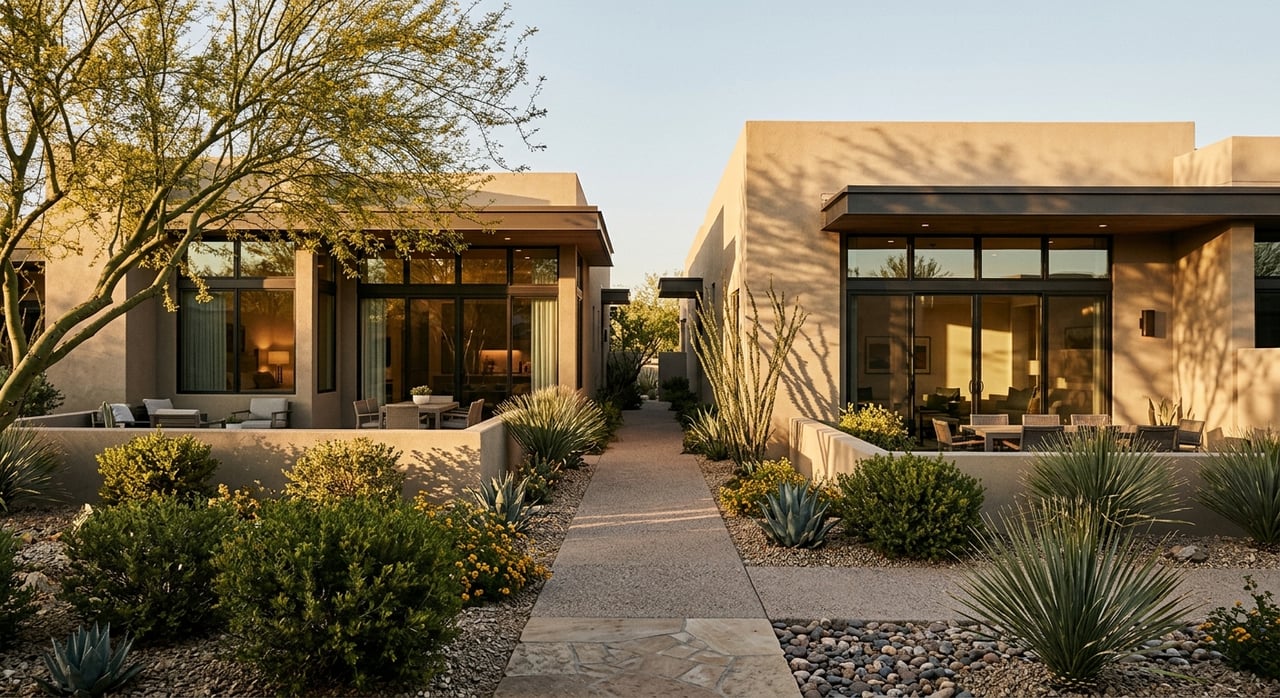
If you are shopping for a home in Green Valley, one question can change everything: are you buying into a 55+ community, an HOA, Green Valley Recreation, or all three? That layered setup is one of the biggest reasons buyers can feel confused here, especially if you are relocating or comparing several neighborhoods at once. The good news is that once you understand how the pieces fit together, Green Valley becomes much easier to navigate. Let’s dive in.
Why Green Valley Can Feel Different
Green Valley is not a one-size-fits-all active adult market. In many cases, you are evaluating the home, the homeowners association, and whether the property includes Green Valley Recreation, often called GVR.
That matters because GVR and age restrictions are not the same thing. GVR is a membership-based nonprofit recreation system that serves about 80% of households in the area, while 55+ status depends on separate community rules and legal standards. In other words, a home can have GVR without being age-restricted, and a 55+ community can have its own HOA structure that is separate from GVR.
For 2026, GVR lists annual dues of $545, a membership change fee of $3,200, and a transfer fee of $470. GVR membership can be a deed restriction that stays with the property in perpetuity, and some homes within GVR boundaries may be able to add membership if they are not already deed-restricted.
GVR vs HOA: The Basic Difference
What GVR Covers
GVR dues pay for access to the recreation system, not for upkeep of your home. Members can use recreation centers, reserve facilities, and participate in classes and clubs across the network.
GVR operates 15 recreation centers in the area, including a 24-court pickleball center. Amenities vary by center and may include pools, fitness rooms, arts spaces, walking tracks, racquet sports, and meeting areas.
What HOA Dues Cover
HOA dues are separate from GVR dues. In general, HOA fees support common-area maintenance, association operations, reserves, and enforcement of community rules.
What is actually included can vary a lot by neighborhood. One community may cover only landscaping and shared spaces, while another may also include exterior maintenance, roof repair, trash service, pest control, cable, or certain insurance coverage.
How 55+ Rules Work
Age Restriction Is Its Own Layer
A 55+ designation is separate from both the HOA and GVR. Under federal housing rules for older persons, a community can qualify as 55+ if at least 80% of occupied units have at least one resident who is 55 or older, and the community follows policies that show that intent.
For you as a buyer, the key takeaway is simple: never assume every Green Valley home is in a 55+ neighborhood just because it is in Green Valley. You need to confirm the age restrictions for the specific community and the specific property.
Rental and Occupancy Rules Matter Too
If you plan to use the home seasonally or rent it out, read the occupancy and lease rules closely. Arizona law treats HOA rules, CC&Rs, resale disclosures, and age-restricted rental disclosures as separate issues that buyers should review.
GVR also has tenant procedures. Tenant cards require completed paperwork, and if an owner transfers GVR privileges to a tenant, the owner does not keep those privileges during the tenancy.
Green Valley Community Types at a Glance
Green Valley offers a wide range of 55+ options, from lower-maintenance townhome communities to larger resort-style neighborhoods. That variety is a plus, but it also means you should compare communities at the neighborhood level instead of relying on a single townwide impression.
Quail Creek
Quail Creek is a gated 55+ Robson community in the Green Valley area of Sahuarita. It is known for private resort-style amenities, including the Madera Clubhouse, Anza Athletic Club, Canyon Club, pickleball, golf, and build-to-order homes.
Current Robson pricing shows floorplans from $315,900 to $436,900, while the broader community range has been noted from the $310s to the $900s. This is a good example of a community where private amenities play a major role in the lifestyle offering.
Las Campanas
Las Campanas is a large master-planned neighborhood with nearly 1,600 homes and multiple sub-associations. That means fees, rules, and maintenance responsibilities can differ depending on the tract.
The GVR Las Campanas center includes racquetball, tennis, a pool and spa, fitness, an auditorium, an art gallery, and meeting rooms. Recent market snapshots place Las Campanas around a median listing or sale price in the low-to-mid $300s.
Green Valley Fairways and Desert Hills
These are more established 55+ areas that often fall into the lower-to-mid price bands compared with newer active-adult communities. Green Valley Fairways is the largest HOA in Green Valley, with 759 homes across three subdivisions, and recent market snapshots have placed its median home price around $245,000 to $264,500.
Desert Hills 2 is a 613-home age-restricted community established in 1978. The HOA notes a mix of year-round residents, seasonal owners, and investors, which makes it a useful reminder that owner patterns can vary meaningfully from one neighborhood to another.
Canoa Ranch and Canoa Ridge
Canoa Ranch is generally one of the newer and pricier active-adult areas in Green Valley. Current market snapshots have ranged from about $420,000 to $449,000.
Canoa Ridge is a smaller age-restricted community with 128 townhomes and stand-alone homes. Homes there are all 2-bedroom, 2-bathroom layouts and generally range from about 1,500 to more than 2,000 square feet.
Encanto Estates
Encanto Estates is a smaller 55+ townhome community with 59 units built in the late 1980s. It requires GVR membership, which makes it a strong example of why the HOA and GVR relationship should be reviewed together.
If you want a lower-maintenance setup, communities like this can be appealing, but the exact fee structure and coverage matter.
What Amenities Really Depend On
In Green Valley, amenities often come down to whether a community relies on GVR, private facilities, or both. That is an important distinction when you are comparing value.
For example, the Las Campanas center is known for racquet sports and social space. Canoa Ranch emphasizes an indoor pool, pickleball, and a large fitness room, while Canoa Hills adds a walking track, bocce, and park-like outdoor areas.
Desert Hills has GVR’s largest and newest fitness center, along with sauna and studio space. East Center is known for arts, billiards, pickleball, and lapidary and silversmithing.
Typical Price Ranges in Green Valley
Green Valley’s market is broad, so one median number does not tell the full story. Zillow reported a median sale price of $268,445 in March 2026, while Realtor.com reported a median sale price of $324,900 for the broader market, which shows why neighborhood comps matter.
Realtor.com also described Green Valley as a balanced market overall, with median days on market around 59 in February 2026. For buyers, that suggests a market where careful comparison and due diligence still matter.
Practical Price Bands to Expect
- Lower-to-mid $200s: older, established HOA neighborhoods such as Green Valley Fairways and some Desert Hills homes
- Low-to-mid $300s: Las Campanas resales and some newer or updated homes in established areas
- Low-to-mid $400s and up: newer Canoa Ranch homes and larger active-adult properties
- Quail Creek: new construction starting in the low $300s, with broader pricing extending well higher depending on home and location
These are not fixed rules. They are useful working ranges based on current market snapshots.
HOA Basics You Should Review Before You Buy
Read the CC&Rs and Resale Packet
Arizona law gives buyers important access to association documents during resale. In planned communities with 50 or more units, the association must provide items such as the bylaws, declaration, current assessments, insurance statement, reserve information, budget, most recent financial report, reserve study if there is one, and a summary of pending lawsuits within 10 days after notice of sale.
This is one of the most important parts of your due diligence. It helps you understand not only what the rules are today, but also whether the association appears financially prepared for future repairs and maintenance.
Understand Fees at Closing
In Green Valley, you may need to budget for more than standard closing costs. Buyers can face HOA-related resale charges as well as separate GVR membership change and transfer fees, depending on the property.
Arizona law also caps an association’s aggregate resale, lien-estoppel, and transfer fee at $400. That cap applies to the association side, not to separate GVR charges.
Ask What the HOA Actually Maintains
Do not assume one Green Valley HOA works like another. Some communities may cover roof repair, exterior maintenance, pest control, garbage collection, cable, or blanket insurance, while others may cover far less.
That difference affects your monthly budget and your long-term maintenance planning. It can also shape how “low maintenance” a home really feels after closing.
Smart Questions to Ask Before You Make an Offer
Before you move forward on a Green Valley home, ask these questions early:
- Is the property GVR deed-restricted, GVR-available, or not eligible for GVR?
- Is the community age-restricted, and how are the occupancy rules enforced?
- What exactly do the HOA dues cover?
- Are there reserve-funded projects or special assessments coming up?
- What transfer and membership fees apply at closing?
- Which amenities are private to the community, and which come from GVR?
- If you plan to rent seasonally, what are the lease rules and tenant procedures?
For seasonal owners especially, it is also smart to ask about everyday practicals like mail handling, access arrangements, pet rules, and how actively the board enforces community standards.
Why Local Guidance Helps in Green Valley
Green Valley can be a great fit if you want active-adult living, lower-maintenance options, or a strong recreation network. But because each home may sit inside several overlapping layers of rules, fees, and amenities, the details matter.
That is where neighborhood-level guidance can make a real difference. When you compare communities one by one, review the documents carefully, and match the lifestyle to your goals, you can buy with much more confidence.
If you are comparing Green Valley 55+ communities or trying to make sense of HOA and GVR costs, The Tucson Agents can help you sort through the details and find the right fit for your goals.
FAQs
What is the difference between GVR and an HOA in Green Valley?
- GVR pays for access to recreation centers, classes, clubs, and system-wide amenities, while HOA dues usually pay for community operations, common-area maintenance, reserves, and rule enforcement.
Are all Green Valley homes in 55+ communities?
- No. Green Valley includes many age-restricted communities, but not every home is in a 55+ neighborhood, and GVR membership is also separate from age restriction.
What are GVR fees in Green Valley for 2026?
- GVR lists 2026 annual dues of $545, a membership change fee of $3,200, and a transfer fee of $470.
What should buyers review in a Green Valley HOA resale packet?
- Buyers should review the declaration, bylaws, assessments, budget, financial report, insurance information, reserve information, reserve study if available, and any summary of pending lawsuits.
Do HOA dues in Green Valley always cover exterior maintenance?
- No. Coverage varies by community, so you should confirm whether the HOA covers items like roofs, exterior maintenance, pest control, trash, cable, or insurance before you buy.
Which Green Valley communities tend to be more affordable?
- Based on recent market snapshots, older established neighborhoods such as Green Valley Fairways and some Desert Hills homes often fall in the lower-to-mid $200,000 range, though pricing varies by property and timing.